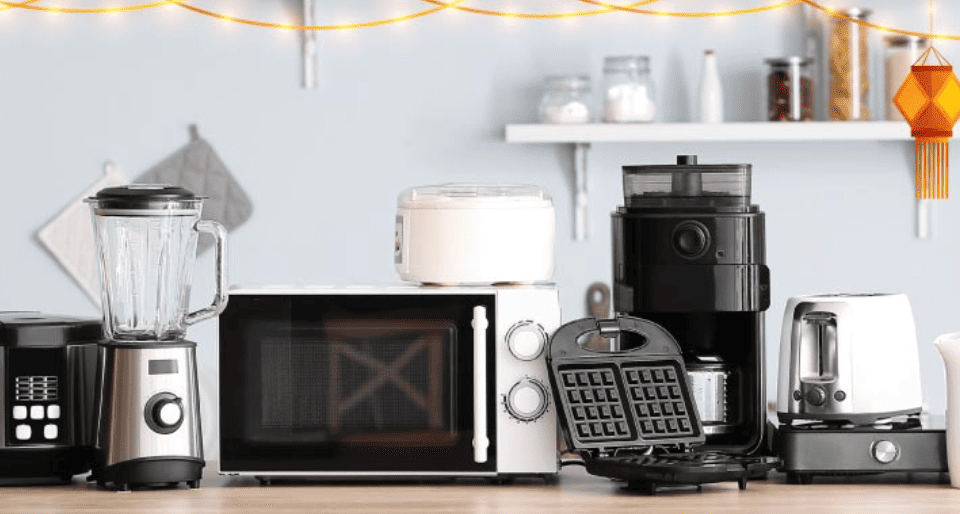
Kitchen & Home Appliances: Best Air Fryers for Small Families, Portable Blenders, Coffee Machines and Time-Saving Kitchen Gadgets

Affiliate Disclosure: This article may contain affiliate links. If you purchase through these links, we may earn a commission at no additional cost to you.
Click here and visit now-
1. Introduction to Modern Kitchen Appliances
The kitchen has changed significantly over the years. What was once a space filled with traditional cookware, basic utensils and a few essential electrical appliances has gradually become a more convenient and technology-driven part of the home. Today, homeowners have access to a wide range of kitchen and home appliances designed to simplify cooking, reduce preparation time and make everyday routines more manageable. From preparing crispy snacks in an air fryer to blending a fresh smoothie before heading to work, modern appliances offer solutions for tasks that previously required considerably more effort.
One of the biggest advantages of modern kitchen appliances is that you no longer need a large kitchen or an expensive collection of equipment to enjoy greater convenience. Compact air fryers, portable blenders, small coffee makers and multifunctional food processors are designed to fit different lifestyles. A small family living in an apartment, a working professional with a busy schedule or someone who enjoys experimenting with recipes can all benefit from choosing the right equipment. The important thing is to purchase appliances that solve genuine everyday problems rather than filling your kitchen with products you might rarely use.
Recent appliance buying guides also show how much attention consumers are giving to functionality, ease of cleaning, capacity and overall performance. For example, the 2026 kitchen technology coverage from Engadget highlights air fryers, food preparation appliances and other countertop equipment as useful additions to modern kitchens. Engadget+1
In this guide, we will explore four popular categories: air fryers for small families, portable blenders, coffee machines for home and time-saving kitchen gadgets. We will also discuss what features matter, which appliances suit different households and how to make smarter purchasing decisions.
2. Best Air Fryers for Small Families
Why Food Isn’t Crispy in Air Fryer: 9 Fixes That Work | KitchenGearAudit
9
An air fryer has become one of the most interesting additions to a modern kitchen, particularly for households that enjoy fried or crispy food but want a more convenient cooking method. Unlike traditional deep fryers, air fryers use rapidly circulating hot air to cook food. This creates a crisp exterior without requiring food to be submerged in large quantities of cooking oil. You can prepare French fries, roasted vegetables, chicken pieces, paneer snacks, fish and several other everyday dishes using relatively little oil.
For small families, choosing the right capacity is particularly important. A large appliance might occupy unnecessary counter space, while an extremely small model could require multiple cooking batches. A household of two people may find a compact model sufficient, whereas a family of three or four might prefer a larger basket. The right choice depends on portion sizes, cooking frequency and the types of dishes you prepare.
An air fryer can also be useful for reheating certain foods. Pizza slices, leftover snacks and roasted items can regain some of their crispness without becoming as soft as they might in a microwave. However, it is important to understand that an air fryer does not replace every kitchen appliance. It is particularly useful for roasting, crisping and reheating, while a microwave, pressure cooker or traditional oven may remain more suitable for other cooking tasks.
3. What Makes an Air Fryer Worth Buying?
The real value of an air fryer comes from its ability to make everyday cooking easier without introducing a complicated process. Imagine returning home after a busy day and wanting something quick to eat. Instead of heating a large pan, preparing excessive oil and monitoring food continuously, you can place prepared ingredients inside the air fryer, select the cooking temperature and set the timer. Once the cooking cycle finishes, many models automatically switch off or provide an alert. This convenience makes air fryers particularly appealing to people who prefer simple meals and do not want to spend too much time in the kitchen.
Another advantage is versatility. A good air fryer can handle more than frozen snacks and French fries. Depending on its design and cooking capacity, you can prepare roasted vegetables, chicken wings, grilled paneer, baked potatoes, fish fillets and even selected desserts. Some models include multiple cooking programmes, adjustable temperature settings and accessories that expand their functionality. However, remember that preset programmes are not essential for everyone. Someone who regularly prepares similar meals may be perfectly happy with a straightforward timer and temperature dial.
Air fryers are also worth considering when you frequently cook smaller portions. Heating a large conventional oven for a small serving may be unnecessary, whereas a compact air fryer can be a practical alternative. Actual electricity savings depend on the appliance, cooking duration, temperature and the oven being compared. It is therefore better to evaluate energy consumption using your own cooking habits instead of assuming every air fryer is automatically cheaper to operate.
4. Important Features to Consider When Buying an Air Fryer
Before purchasing an air fryer, consider its capacity, power consumption, temperature range and cleaning requirements. These specifications directly influence how convenient the appliance will be after the initial excitement of buying it has disappeared. A household with two people might prefer a compact basket, while a family that regularly prepares meals for four people should consider a larger cooking chamber. For reference, an Indian consumer buying guide identifies approximately 4–6 litres as a useful capacity range for a family of four, although individual requirements vary. CERC India+1
The heating system is another important consideration. Air fryers commonly use powerful heating elements and fans to circulate hot air around food. Higher wattage can support faster heating, but it also means you should check whether your kitchen’s electrical connection can safely handle the appliance. Temperature adjustment is equally important because different ingredients require different cooking conditions. A model offering a broad temperature range gives you more flexibility than one with only a handful of fixed settings.
Cleaning is often overlooked when shoppers compare appliances. Look for a removable basket, an accessible cooking chamber and a food tray that can be cleaned without excessive effort. A dishwasher-safe component can be helpful, but always check the manufacturer’s cleaning instructions. A non-stick coating should also be handled carefully to avoid scratches.
| Feature | What to look for | Why it matters |
|---|---|---|
| Capacity | Suitable for household size | Prevents repeated cooking batches |
| Wattage | Appropriate for kitchen wiring | Supports safe and efficient operation |
| Temperature | Adjustable controls | Provides cooking flexibility |
| Timer | Automatic shut-off | Helps prevent overcooking |
| Basket | Removable and easy to clean | Makes maintenance easier |
| Safety | Cool-touch handle and stable base | Improves everyday usability |
| Presets | Useful cooking programmes | Simplifies common recipes |
Other useful features include a viewing window, shake reminders, digital displays and dual cooking baskets. These features can improve convenience, but they should not automatically justify paying more. Prioritise reliable cooking performance, practical capacity and after-sales support before considering decorative displays or unnecessary smart functions.
5. Best Portable Blenders for Everyday Use
Sboly Portable Blender, USB Rechargeable Personal Blender for Shakes a
Order Nutribullet – Portable Blender – Off-White – 475 ml Now! | Jomla.ae
12
Portable blenders are an excellent option for people who enjoy smoothies, protein shakes, fruit drinks and other blended beverages but do not want to operate a full-sized mixer every time. Unlike traditional countertop blenders, these compact appliances are designed to combine blending and drinking in one convenient container. You can prepare a drink, remove the lid and carry the bottle to your workplace, gym or another destination, depending on the product’s design.
One reason portable blenders have gained attention is their convenience for single servings. Preparing a smoothie in a large blender can feel unnecessarily complicated when you only need one glass. You have to assemble the jar, connect the appliance, blend the ingredients, transfer the drink and wash several components. A portable model reduces much of this effort by allowing you to blend directly inside the drinking container. For working professionals and people with busy mornings, this can make preparing fresh drinks a more realistic daily habit.
These appliances are particularly useful for blending softer ingredients such as bananas, mangoes, strawberries, yoghurt and other fruits when sufficient liquid is added. They can also be useful for preparing protein shakes and simple nutritional drinks. However, portable blenders should not be confused with powerful countertop blenders or traditional Indian mixer grinders. Their compact motors are generally designed for lighter blending tasks, not heavy grinding, thick batters or large quantities of ingredients.
Before buying one, think about where you will use it. Someone who wants to prepare a quick drink at home may prioritise cleaning convenience, while someone who plans to carry the appliance to work may care more about battery life, weight and leak resistance. The best portable blender is the one that fits your routine instead of simply having the largest number of advertised features.
6. Features to Look for in a Portable Blender
The first specification to examine is the blending capacity. Portable blenders are generally designed for individual portions, so their containers are smaller than those of conventional appliances. A capacity of approximately 300–500 ml can be practical for many single-serving drinks, although the ideal size depends on how much you normally consume. A larger container may sound attractive, but it can make the blender heavier and less convenient to carry.
Battery performance deserves special attention. Manufacturers often advertise battery capacity in milliamp-hours, but that number alone does not tell you how many smoothies you can prepare before recharging. Actual performance depends on motor efficiency, ingredient density, blending duration and battery condition. Check whether the manufacturer provides a realistic estimate of blends per charge. USB-C charging can also be more convenient because it reduces the need to carry a separate charging cable.
Blade quality and safety mechanisms are equally important. Look for durable stainless-steel blades and a locking system that prevents accidental operation when the container is not properly assembled. A leak-resistant lid can make transportation easier, although you should still follow the manufacturer’s instructions before carrying liquid inside the bottle. Avoid operating the blender with dry ingredients or hard frozen items unless the manufacturer specifically confirms that the model supports them.
A recent portable blender buying guide highlights an important distinction: these appliances work best for individual drinks and softer ingredients, rather than replacing full-sized blenders. It also recommends paying attention to safety locks, bottle construction and practical battery performance. SOLARA
| Portable blender feature | Recommended consideration |
|---|---|
| Capacity | Around 300–500 ml for individual drinks |
| Charging | Convenient rechargeable design |
| Blades | Durable stainless steel |
| Container | Food-safe, sturdy material |
| Safety | Proper locking mechanism |
| Portability | Lightweight and easy to carry |
| Cleaning | Removable or easy-to-rinse components |
7. Best Coffee Machines for Home
Best Compact Espresso Machines for Small Kitchens | Apartment Barista
How to Brew Coffee at Home | Drip, French Press, Moka & Cold Brew Guide – Java Momma
11
For many people, coffee is more than just a beverage. It is part of the morning routine, an afternoon break and sometimes the perfect companion for a long working session. Preparing coffee at home can be convenient, particularly if you regularly visit cafés or purchase takeaway drinks. A suitable home coffee machine allows you to experiment with different brewing methods while enjoying greater control over ingredients, strength and serving size.
The biggest advantage of owning a coffee machine is consistency. Once you understand the settings and brewing process, you can prepare similar cups of coffee without repeating the entire process manually. Depending on the appliance, you may also be able to adjust brewing strength, water quantity, temperature and milk preparation. Some machines include built-in grinders, automatic milk frothers and programmable brewing options.
However, not every coffee machine suits every household. Someone who enjoys simple black coffee may find a basic drip machine perfectly adequate. An espresso enthusiast might prefer a dedicated espresso machine with a steam wand. A person who values convenience above everything else may prefer an automatic machine that handles most of the preparation process.
Before investing in an expensive coffee maker, consider how frequently you drink coffee and which beverages you actually enjoy. A premium espresso machine may look impressive on a kitchen counter, but it is not necessarily a practical purchase if you only prepare one occasional cup. The right machine should improve your daily routine, not create another complicated maintenance task.
8. Different Types of Coffee Machines
Understanding the different types of coffee machines is the easiest way to narrow down your choices. Each category offers a different brewing experience, level of convenience and price range. Knowing these differences can prevent you from purchasing a machine that looks attractive but does not produce the type of coffee you enjoy.
Drip coffee makers are among the simplest options for home brewing. They work by heating water and passing it through ground coffee inside a filter. The prepared coffee collects in a carafe or serving container. These machines are useful for people who prefer regular black coffee and want to prepare multiple cups in one brewing cycle. They generally have straightforward controls and do not require advanced coffee-making skills.
Espresso machines are designed to force hot water through finely ground coffee under pressure. This produces a concentrated coffee shot that can serve as the foundation for drinks such as cappuccinos, Americanos and lattes. Some machines include a manual steam wand, allowing users to froth milk themselves. They offer greater control over the preparation process but require practice to achieve consistent results.
Bean-to-cup machines combine grinding and brewing in one appliance. You add whole coffee beans, select your preferred settings and allow the machine to prepare the drink. These models are attractive to people who value convenience and freshly ground coffee. Their drawbacks can include higher purchase prices, larger dimensions and more demanding maintenance.
Pod coffee machines use pre-packaged coffee capsules or pods. They are convenient because they minimise measuring and preparation. However, users must consider the recurring cost and availability of compatible capsules. Depending on the system, recycling and waste management may also be important considerations.
French presses offer a simpler manual alternative. Ground coffee is steeped in hot water before a plunger separates the grounds from the prepared drink. They do not require electricity, making them useful for people who prefer a straightforward brewing method.
| Coffee machine type | Best suited for | Main advantage | Potential drawback |
|---|---|---|---|
| Drip coffee maker | Everyday black coffee | Simple preparation | Limited espresso-style options |
| Espresso machine | Espresso-based drinks | Greater brewing control | Requires practice |
| Bean-to-cup | Convenience-focused users | Grinding and brewing together | Higher initial cost |
| Pod machine | Quick individual servings | Minimal preparation | Recurring capsule costs |
| French press | Manual coffee enthusiasts | Simple, electricity-free brewing | Requires manual preparation |
9. How to Choose the Right Coffee Machine
Start by identifying your preferred coffee style. Do you enjoy a strong espresso, a large cup of black coffee or milk-based beverages such as cappuccinos? Your answer will help determine which machine category makes sense. Buying an espresso machine simply because it offers advanced specifications is unnecessary if your everyday preference is filtered coffee.
Next, consider brewing capacity. A single person who drinks one cup every morning may prefer a compact machine, whereas a household with several coffee drinkers might need a model capable of preparing multiple servings. Water tank capacity, carafe size and brewing time all influence everyday convenience. A removable water reservoir can also make refilling and cleaning easier.
Milk preparation is another feature worth examining. If you regularly drink cappuccinos or lattes, look for a machine with a milk frother or steam wand. Some automatic models handle milk preparation with minimal effort, while manual machines require more involvement. Remember that milk systems need regular cleaning to maintain hygiene and performance.
Do not overlook the cost of ownership. The purchase price is only one part of the overall expense. Coffee beans, capsules, filters, cleaning solutions and replacement components can add to long-term costs. Before choosing a machine, compare its purchase price with the recurring expenses associated with your preferred brewing method.
Finally, check the manufacturer’s warranty and availability of service support. Coffee machines contain heating components, pumps and other mechanical parts that may require maintenance over time. A machine with accessible replacement parts and clear servicing instructions can be a better long-term investment than an inexpensive alternative with limited support.
10. Best Kitchen Gadgets That Save Time
You searched for 63785890021900 – Kokido
Shop 3 in 1 Digital Egg Cooker | LED Digital Display
Best Immersion Blenders of 2026 for Soups & More
9
Not every useful kitchen appliance needs to be large, expensive or technologically advanced. Sometimes, the smallest gadgets make the biggest difference to everyday cooking. Think about the time spent chopping vegetables, preparing ingredients, measuring quantities, mixing sauces and cleaning utensils. These tasks may seem insignificant individually, but together they can make meal preparation feel exhausting, particularly when you have a busy schedule.
Time-saving kitchen gadgets are designed to reduce repetitive manual work and make common cooking activities easier. An electric vegetable chopper can reduce preparation time, a food processor can handle multiple ingredients and an immersion blender can prepare soups without requiring you to transfer hot liquids into another container. Similarly, a digital kitchen scale can improve measurement accuracy when following recipes.
The key is to choose gadgets based on your actual cooking habits. A person who regularly prepares salads may benefit from a vegetable chopper, while someone who enjoys baking might find a digital weighing scale more useful. Families that cook large meals may appreciate a food processor, whereas people living alone may prefer smaller multifunctional tools.
Here are some practical kitchen gadgets worth considering when upgrading your cooking setup.
11. Electric Vegetable Choppers and Food Processors
Electric vegetable choppers are among the most practical additions to a busy kitchen. Chopping onions, tomatoes, carrots, cucumbers and other vegetables manually can take considerable time, particularly when preparing meals for several people. An electric chopper uses rotating blades to process ingredients inside a compact container, reducing the amount of repetitive knife work required.
These appliances are especially useful for preparing ingredients for everyday dishes. You can use them to chop vegetables for salads, prepare ingredients for sandwiches, or process selected ingredients for sauces and dips. Some models offer interchangeable blades or different speed settings, allowing you to adjust the chopping consistency. However, you should always follow the manufacturer’s instructions because different ingredients require different processing techniques.
A food processor offers more versatility than a basic electric chopper. Depending on the model and attachments, it may chop, slice, grate, shred, mix and knead selected ingredients. This makes it particularly useful for households that prepare a variety of meals. Some larger models can replace several individual kitchen tools, although they usually require more storage space and cleaning effort.
| Feature | Electric chopper | Food processor |
|---|---|---|
| Main purpose | Chopping ingredients | Multiple preparation tasks |
| Size | Usually compact | Often larger |
| Functions | Limited | Multiple attachments |
| Storage | Easy | Requires more space |
| Best for | Small daily preparation | Frequent and varied cooking |
| Cleaning | Generally straightforward | Depends on attachments |
When comparing models, examine blade quality, container capacity, motor performance and safety locks. A stable base and a secure lid are important because the appliance contains rapidly rotating blades. Removable components can make cleaning easier, while dishwasher-safe attachments can provide additional convenience when supported by the manufacturer.
12. Hand Blenders and Immersion Blenders
A hand blender, also called an immersion blender, is another useful appliance for people who regularly prepare soups, sauces, smoothies and purees. Unlike a conventional countertop blender, it can be placed directly inside a suitable container or cooking vessel. This means you do not necessarily need to transfer ingredients between multiple jars during preparation.
Imagine preparing a homemade tomato soup. After cooking the ingredients in a saucepan, you can use an immersion blender to create a smoother consistency directly inside the pot, provided the appliance is designed for that temperature and the manufacturer’s instructions allow it. This reduces the number of utensils involved and makes cleanup easier.
Hand blenders can also help with preparing pancake mixtures, mayonnaise, chutneys, baby food and certain sauces. Some models include additional attachments, such as whisking accessories and chopping containers, making them more versatile.
When purchasing one, consider motor power, blade material, grip comfort and speed control. A stainless-steel blending shaft can be useful when processing warm ingredients, while detachable components make cleaning more convenient. However, you should avoid immersing the motor housing in water unless the manufacturer specifically states that it is waterproof.
For someone who regularly prepares soups, purees and blended sauces, an immersion blender can be a practical investment without occupying the counter space required by a large appliance.
13. Digital Kitchen Scales and Smart Cooking Tools
Guía Experta: Cómo Elegir la Báscula Digital Perfecta en Amazon
A digital kitchen scale may look like a simple accessory, but it can significantly improve cooking consistency. Measuring ingredients using cups, spoons or estimates can sometimes produce inconsistent results, particularly when baking. A digital scale allows you to measure ingredients by weight, making it easier to follow recipes accurately.
For example, measuring flour by weight can be more consistent than using a cup because the amount of flour in a cup may change depending on how tightly it is packed. The same applies to sugar, nuts, butter and other ingredients. This is particularly useful when preparing cakes, bread, cookies and other recipes that depend on precise proportions.
A good kitchen scale should have an easy-to-read display, sufficient weight capacity, accurate measurement increments and a convenient tare function. The tare function allows you to reset the displayed weight after placing a container on the scale, making it easier to measure multiple ingredients in the same bowl.
Other smart cooking tools can also improve the cooking experience. Digital food thermometers, programmable timers and temperature-monitoring devices help you check cooking conditions without relying entirely on guesswork. A food thermometer is especially useful when preparing meat, poultry and other dishes where internal temperature matters for food safety.
Smart features are useful when they solve a genuine problem. An appliance does not become more practical simply because it connects to a smartphone or includes a digital screen. Prioritise accuracy, reliability and ease of use.
14. Other Useful Kitchen Gadgets
Apart from major appliances, several smaller kitchen tools can make everyday cooking more convenient. You do not need to purchase everything at once. Instead, identify the repetitive activities that consume the most time in your kitchen and choose gadgets that directly address them.
Electric egg boilers are useful for preparing boiled eggs with relatively little supervision. Depending on the model, you can adjust water quantity or select settings for different cooking preferences. They are particularly convenient for people who regularly include boiled eggs in breakfast or meal preparation.
Electric rice cookers simplify rice preparation by automating the heating and cooking process. Many models automatically switch to a keep-warm setting after cooking. Some multifunctional versions also support porridge, steaming and other cooking programmes, although performance varies by appliance.
Milk frothers are compact tools for preparing foamy milk for cappuccinos, lattes and other beverages. They can be particularly useful for coffee enthusiasts who do not own an espresso machine with an integrated milk system.
Electric kettles are useful for quickly heating water for tea, coffee, instant meals and other everyday requirements. Look for automatic shut-off, boil-dry protection and a comfortable handle.
Mandoline slicers and manual vegetable cutters can help prepare uniformly sliced ingredients. However, blade guards and safe handling are essential because exposed cutting surfaces can cause injuries.
Garlic presses, citrus juicers and measuring accessories are smaller purchases that can also make regular food preparation easier. These products are inexpensive compared with larger appliances, but they can be valuable when they are used frequently.
| Kitchen gadget | Main purpose | Ideal user |
|---|---|---|
| Electric egg boiler | Preparing boiled eggs | Breakfast enthusiasts |
| Rice cooker | Automated rice preparation | Busy households |
| Milk frother | Creating milk foam | Coffee lovers |
| Electric kettle | Heating water | Everyday home use |
| Vegetable slicer | Cutting vegetables | Frequent home cooks |
| Citrus juicer | Extracting fresh juice | People making fresh drinks |
| Digital thermometer | Checking food temperature | Home cooks and bakers |
15. How to Choose the Right Kitchen Appliances for Your Home
Choosing kitchen appliances is not simply about comparing specifications or purchasing the most expensive product. The best appliance is one that matches your household requirements, available space and everyday routine. Before making a purchase, think about how frequently you cook, how many people you prepare meals for and which tasks take up the most time.
Kitchen space is particularly important. A large food processor or coffee machine might offer impressive features, but it could become inconvenient if your countertop is already crowded. Compact appliances are generally easier to store, although smaller dimensions sometimes mean reduced capacity. Measure the available space before purchasing and consider whether the appliance needs additional clearance for ventilation or operation.
You should also think about multifunctionality. A food processor with multiple attachments may be more practical than purchasing separate chopping, slicing and mixing devices. Similarly, an appliance combining air frying, baking and other cooking functions might be attractive if you regularly use those features. However, multifunctional products are not automatically better. Dedicated appliances can sometimes perform their primary function more effectively or be easier to clean.
Another important factor is after-sales service. Check warranty coverage, availability of replacement accessories and the manufacturer’s customer support network. This is particularly relevant for households in India, where access to authorised service centres can vary between cities. A slightly more expensive product with reliable support may offer better long-term value than an inexpensive alternative with limited servicing options.
Finally, consider your total budget. Instead of buying four or five appliances together, start with the one that addresses your most frequent problem. You can gradually expand your collection as your needs change.
16. Energy Efficiency and Electricity Consumption
Electricity consumption is an important consideration when buying kitchen appliances. Although small appliances generally consume less electricity than large household equipment, their actual running costs depend on wattage, operating duration and frequency of use.
For example, a 1,500-watt air fryer operating continuously for 20 minutes would consume approximately 0.5 kWh of electricity. If your electricity tariff is ₹8 per unit, the theoretical electricity cost would be approximately ₹4 for that operating period. Actual consumption may vary because heating elements cycle on and off during cooking.
A coffee machine may have a relatively short brewing cycle but could consume additional electricity if it maintains heating or standby functions. Similarly, a portable blender may use less electricity overall because it operates on a rechargeable battery, but charging frequency and battery efficiency still matter.
Here is a simple comparison of illustrative electricity consumption. These figures are examples rather than guaranteed specifications for every model.
| Appliance | Illustrative power | Example operating time | Approximate consumption |
|---|---|---|---|
| Air fryer | 1,500 W | 20 minutes | 0.50 kWh |
| Coffee maker | 1,000 W | 10 minutes | 0.17 kWh |
| Food processor | 500 W | 5 minutes | 0.04 kWh |
| Hand blender | 300 W | 3 minutes | 0.015 kWh |
| Electric kettle | 1,500 W | 5 minutes | 0.125 kWh |
To reduce electricity usage, choose appliances with suitable capacity instead of unnecessarily large models. Avoid running high-power appliances longer than required, and switch off equipment when it is not in use. Always check the rated power and electrical requirements before connecting a new appliance.
Energy efficiency is not just about buying the appliance with the lowest wattage. A model that completes a task efficiently may consume less electricity overall than a low-powered alternative that needs significantly more operating time.
17. Cleaning, Maintenance and Appliance Safety
Small Kitchen Appliances | Cupindy
Even the best kitchen appliance will eventually become inconvenient if it is difficult to clean or maintain. Food particles, grease, moisture and mineral deposits can accumulate over time, affecting performance and hygiene. Regular maintenance helps preserve appliance performance and can reduce the likelihood of avoidable problems.
For air fryers, allow the appliance to cool before cleaning removable components. Remove food residue from the basket and cooking tray using suitable cleaning materials. Avoid abrasive scrubbers that may damage non-stick coatings. The heating chamber should also be checked periodically for grease accumulation, following the manufacturer’s cleaning instructions.
Portable blenders require particular attention because they contain sharp blades and rechargeable electrical components. Clean the blending container and blade assembly according to the instructions, and never submerge the motor or charging components unless explicitly permitted. Ensure the appliance is properly dry before charging or storing it.
Coffee machines need regular cleaning to prevent residue from affecting flavour and performance. Empty drip trays, wash removable containers and clean milk frothing components after use. Depending on water hardness and manufacturer recommendations, periodic descaling may also be necessary to remove mineral deposits.
Food processors and vegetable choppers should be disconnected from power before cleaning their blades or attachments. Handle cutting components carefully and store them securely.
Safety should always come before convenience. Use appliances on stable, dry surfaces, avoid overloading electrical sockets and never operate damaged cables or plugs. High-wattage appliances should be connected to suitable electrical outlets with appropriate wiring and protective arrangements. Keep appliances away from water sources and follow the manufacturer’s operating instructions.
A simple cleaning routine after every use can prevent many common maintenance problems and help your appliances remain useful for longer.
18. Common Mistakes to Avoid When Buying Kitchen Appliances
Buying kitchen appliances can be exciting, especially when you come across attractive designs, impressive discounts and long lists of advertised features. However, many shoppers make purchasing decisions based on appearance or promotional claims rather than practical requirements. Avoiding a few common mistakes can help you make better decisions and reduce unnecessary expenses.
The first mistake is buying an appliance without considering its capacity. A very small air fryer might appear affordable, but it could become frustrating if you regularly prepare meals for four people. On the other hand, an oversized appliance may occupy valuable counter space and consume more electricity than necessary for smaller portions. Always consider your household size and normal cooking requirements before selecting capacity.
Another mistake is focusing entirely on wattage. Higher wattage does not automatically mean better performance. The design of the heating system, blade quality, motor efficiency and overall construction also matter. Compare complete product specifications rather than selecting a model simply because its advertised power rating is higher.
Ignoring cleaning requirements is another common problem. An appliance might perform exceptionally well but become inconvenient if its components are difficult to remove or wash. Look at product demonstrations, manufacturer cleaning instructions and genuine customer feedback before purchasing.
You should also avoid buying products based entirely on online ratings. Ratings can provide useful information, but they do not always reflect long-term durability or performance in your specific household. Read both positive and negative reviews, paying attention to recurring complaints about motor failure, battery performance, heating consistency, leakage and after-sales service.
Finally, do not assume that expensive appliances are always the best choice. A simple drip coffee maker might suit your routine better than an advanced espresso machine. Similarly, a compact electric chopper may be more useful than a large food processor if you only prepare small quantities.
A sensible purchase is one that delivers consistent value over time, rather than one that simply looks impressive on the day you buy it.
19. Conclusion
Choosing the right kitchen and home appliances can make everyday cooking more convenient, organised and enjoyable. Whether you are preparing quick meals for a small family, making smoothies before heading to work or enjoying freshly brewed coffee at home, the right equipment can simplify your daily routine.
Air fryers are excellent for households looking for convenient roasting, crisping and reheating options. Portable blenders are practical for people who enjoy individual smoothies and protein shakes. Coffee machines offer different brewing experiences depending on personal preferences, while food processors, electric choppers, hand blenders and other kitchen gadgets can reduce repetitive preparation work.
However, buying every available appliance is not necessary. Focus on products that genuinely solve problems in your kitchen. Consider capacity, performance, cleaning requirements, electricity consumption, warranty and long-term reliability before spending your money.
A well-equipped kitchen is not necessarily the one with the most appliances. It is the one where every appliance has a purpose and makes everyday life a little easier. Take your time, compare available options and choose products that offer genuine value for your household.
20. Frequently Asked Questions
1. Which kitchen appliances are most useful for small families?
Air fryers, compact food processors, portable blenders, electric kettles and coffee makers are useful options for small families. These appliances can simplify everyday cooking and beverage preparation without requiring excessive storage space. The best combination depends on household size, cooking preferences and available kitchen space.
2. Are air fryers worth buying for everyday cooking?
Yes, air fryers can be worthwhile for households that regularly prepare roasted vegetables, crispy snacks, chicken, paneer and similar dishes. They offer convenient cooking with less oil than traditional deep frying. However, they are not a complete replacement for conventional cooking appliances, and their usefulness depends on how frequently you prepare suitable foods.
3. Can portable blenders replace traditional blenders?
Portable blenders are suitable for single-serving smoothies, protein shakes and softer ingredients. However, they generally cannot replace powerful countertop blenders or mixer grinders used for grinding spices, preparing thick batters and processing larger quantities. Both appliances serve different purposes.
4. Which coffee machine is best for home use?
The best coffee machine depends on your preferred coffee style. Drip coffee makers are suitable for everyday black coffee, espresso machines are useful for concentrated coffee and milk-based beverages, and bean-to-cup machines offer convenient automatic preparation. Consider brewing capacity, maintenance, operating costs and available space before choosing one.
5. What are the best kitchen gadgets for saving time?
Electric vegetable choppers, food processors, hand blenders, electric egg boilers, rice cookers, digital kitchen scales and electric kettles are useful time-saving kitchen gadgets. Choose appliances according to the tasks you perform most frequently rather than purchasing products simply because they are popular.
Affiliate Disclosure: This article may contain affiliate links. If you make a purchase through these links, we may earn a commission at no additional cost to you. Our recommendations aim to help readers understand product features and make informed purchasing decisions.