
Affiliate Disclosure: This article may contain affiliate links. If you purchase through these links, we may earn a commission at no additional cost to you.
Click here and visit now-
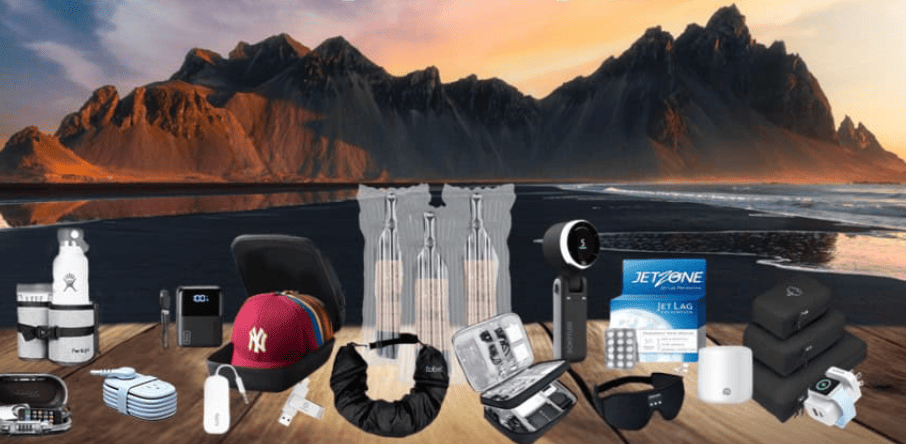
Travelling is exciting, but anyone who has taken a long flight, managed multiple bags through a busy airport or tried to charge a phone in an unfamiliar hotel knows that the journey can come with its fair share of inconveniences. A missing charging cable, uncomfortable headphones, an overcrowded suitcase or a dead phone battery can turn a smooth travel experience into an unnecessarily stressful one. This is where the right travel gadgets and accessories make a difference. They help you stay organised, keep your devices powered, protect important belongings and make long journeys more comfortable.
Travel equipment has evolved considerably. Instead of carrying separate chargers, bulky electronic accessories and poorly organised bags, travellers can now choose compact multiport chargers, portable power banks, wireless headphones, smart luggage trackers and space-saving organisers. Even traditional accessories such as neck pillows, toiletry bags and passport holders have become more practical, with improved materials and travel-friendly designs. The focus in 2026 is not simply on owning more gadgets; it is on choosing lightweight products that solve genuine problems.
Recent 2026 travel gear roundups from publications such as Travel + Leisure, Euronews and PCWorld highlight products ranging from noise-cancelling headphones and universal adapters to luggage trackers, portable chargers and electronic organisers. Their recommendations reinforce an important buying principle: useful travel gear should be portable, dependable and worth the space it occupies in your luggage. <Cite refs={[“turn581385search3″,”turn581385search1″,”turn581385search8”]}/>
But which products are genuinely worth purchasing? Should you invest in premium noise-cancelling headphones? Is hard-shell luggage better than soft-shell luggage? Do you really need a smart luggage tracker, or will a conventional organiser do the job? In this guide, we explore the best travel gadgets for 2026, the most useful accessories for flights and holidays, and the features you should compare before spending your money.
2. Best Travel Gadgets for 2026
The best travel gadgets are not necessarily the most expensive or technologically advanced products. They are the items that make travelling easier without adding unnecessary weight to your bag. A portable charger can keep your phone running when you need digital boarding passes or navigation. A universal adapter can simplify charging in another country, while a luggage tracker can provide additional visibility when your suitcase is out of sight.
One of the most useful gadgets for almost every traveller is a portable power bank. Modern travel relies heavily on smartphones for bookings, tickets, maps, communication, photography and payments. Running out of battery during a journey can create a genuine inconvenience, particularly when you are unfamiliar with your destination. A power bank with USB-C charging and enough capacity for multiple phone charges is therefore a practical investment.
Noise-cancelling headphones are another popular travel companion. They can reduce the distracting sound of aircraft engines, railway noise and busy terminals, making it easier to listen to music, watch films or simply relax. A compact travel adapter is particularly valuable for international trips, while a small electronics organiser keeps charging cables and accessories together.
Other useful products include digital luggage scales, Bluetooth trackers, e-readers, portable Wi-Fi hotspots, foldable phone stands and compact toiletry kits. However, your ideal travel kit depends on the journey. Someone taking a two-day business trip may need very different equipment from someone planning a month-long international holiday.
The following table offers a practical overview:
| Travel gadget | Main purpose | Best suited for |
|---|---|---|
| Portable power bank | Backup device charging | Almost every traveller |
| Universal travel adapter | Connecting devices internationally | International trips |
| Noise-cancelling headphones | Reducing background noise | Flights and train journeys |
| Luggage tracker | Locating compatible tracked belongings | Frequent flyers |
| Digital luggage scale | Checking bag weight | Airline travellers |
| Portable Wi-Fi hotspot | Providing internet connectivity | International and remote travel |
| E-reader | Reading without carrying books | Long journeys |
| Tech organiser | Keeping cables and chargers organised | Gadget-heavy travellers |
The best approach is to select gadgets according to how often you travel and what problems you regularly encounter. A compact charger and organiser may deliver more everyday value than an expensive device you rarely use.
3. Portable Power Banks and Fast Chargers
A portable power bank is one of the most useful items you can carry while travelling. Smartphones have become essential travel tools, and their batteries can drain quickly when you use GPS navigation, mobile data, cameras and travel applications throughout the day. Having backup power means you do not need to search constantly for an electrical outlet at an airport, railway station or tourist attraction.
Power banks come in several capacities. Smaller models are lightweight and convenient for short outings, while higher-capacity versions can recharge a phone multiple times or support compatible tablets and laptops. A 10,000mAh model is often a practical middle ground for everyday travel, while a 20,000mAh option may suit travellers who carry several devices. Actual usable capacity varies because of conversion losses, cable quality and device charging requirements.
Charging speed matters just as much as capacity. Look for USB-C Power Delivery (PD) support when you need faster charging for compatible phones, tablets or laptops. Some models include built-in cables, multiple ports or integrated stands. These features can reduce the number of separate accessories you need to carry.
Fast wall chargers are also worth considering. A compact multiport charger can power a phone, tablet and other compatible devices without requiring several bulky adapters. GaN charging technology allows manufacturers to produce relatively compact chargers with substantial power output, although you should always check the charger’s actual wattage and compatibility with your devices.
Important airline reminder: Power banks contain lithium batteries, so airline restrictions apply. They are generally required to travel in cabin baggage rather than checked luggage, and capacity limits, approval requirements and onboard usage rules can vary by airline and jurisdiction. Check your carrier’s latest policy before departure, especially if you carry high-capacity batteries. Never assume that every power bank is automatically permitted.
4. Universal Travel Adapters and Portable Wi-Fi
International travel introduces a simple but important problem: electrical outlets are not the same everywhere. Plug shapes and electrical standards vary between countries, meaning a charger that works at home may not connect directly to a hotel socket abroad. A universal travel adapter helps solve this problem by supporting multiple plug configurations through one compact device.
A good adapter should support the destinations you visit and provide enough connections for your equipment. Models with USB-A and USB-C ports can reduce the need to carry separate phone chargers. Some advanced options also include USB-C Power Delivery, multiple AC outlets and built-in safety shutters. Before purchasing, check the maximum supported electrical load and the plug configurations included.
One important distinction is that a travel adapter does not necessarily convert electrical voltage. If a device is designed only for a particular voltage, you may need a suitable voltage converter rather than a simple plug adapter. Many modern phone and laptop chargers support a wide input-voltage range, but hair dryers, electric shavers and other appliances should be checked individually.
Portable Wi-Fi hotspots are another useful gadget for international travellers. These devices connect to a mobile network and share an internet connection with multiple devices. They can be convenient for families, business travellers or people who need to connect a laptop and phone simultaneously. However, coverage, data limits, roaming costs and local SIM compatibility should be checked before buying.
An alternative is an eSIM, which allows compatible devices to connect to supported mobile networks without inserting a physical SIM card. This can simplify connectivity, although availability depends on the phone model, destination and provider.
5. Smart Luggage Trackers and Travel Technology
Luggage tracking technology has become an attractive option for people who travel frequently or carry expensive equipment. Small tracking devices can be placed inside a suitcase, backpack or travel bag, allowing users to view its reported location through a compatible smartphone network. This can provide additional reassurance when luggage is checked in or temporarily out of sight.
Different trackers use different technologies. Some rely on Bluetooth and nearby participating devices, while others use GPS or cellular connectivity. Bluetooth trackers are generally compact and designed for location assistance through a compatible finding network. GPS-based trackers can provide more direct location updates but may require a subscription, charging and access to a mobile network.
Before purchasing a tracker, check its compatibility with your smartphone. Some products work primarily within one manufacturer’s ecosystem, while others support different mobile platforms. Battery replacement, water resistance, location-update frequency and subscription charges are also worth considering.
A tracker is a useful accessory, but it is not a guarantee that lost luggage will be recovered. It can help you identify a reported location and share information with an airline or travel provider, but it cannot replace proper luggage identification, insurance or responsible packing.
Other smart travel products include digital luggage scales, electronic luggage locks, portable translation devices and travel routers. A digital scale can help you check baggage weight before reaching the airport, reducing the risk of unexpected excess-baggage charges. A travel router can help create a more manageable connection between your devices and compatible hotel networks.
The key is to choose technology that genuinely improves your journey. A small tracker or scale may be useful on every trip, while a specialised translation gadget may only make sense for travellers visiting destinations where they regularly face language barriers.
6. Best Noise Cancelling Headphones for Flights
Air travel can be exhausting, especially when you are seated near aircraft engines, crying children, conversations or constant cabin announcements. Noise-cancelling headphones for flights are designed to make these environments more comfortable by reducing unwanted background noise. They can help you enjoy entertainment, listen to podcasts or relax during long journeys without needing to increase your audio volume excessively.
There are two main approaches to noise isolation. Passive isolation comes from the physical design of the earcups or ear tips, which helps block external sound. Active Noise Cancellation (ANC) uses microphones and electronic processing to reduce certain environmental noises, particularly steady low-frequency sounds such as engine rumble.
Over-ear headphones are popular for long flights because their cushioned earcups surround the ears and can provide a comfortable fit for extended listening. Wireless earbuds are smaller, easier to store and convenient for travellers who prefer lightweight equipment. The best choice depends on personal comfort, battery life and how much space you want to dedicate to audio accessories.
Several premium product families are worth researching in 2026:
- Sony WH-1000XM6: A premium over-ear option with strong noise isolation, wireless and wired listening support, and travel-focused features.
- Bose QuietComfort range: Known for comfort-focused designs and effective noise cancellation.
- Sennheiser Momentum range: Worth considering for travellers who value sound quality alongside noise cancellation.
- Apple AirPods Pro range: Compact earbuds for travellers who prefer an in-ear design and use compatible Apple devices.
- Bowers & Wilkins PX7 range: A premium option for users who prioritise audio quality and build.
These are examples to compare, not a universal ranking. Independent headphone testing updated on 30 October 2026 identifies the Sony WH-1000XM6 as a leading travel headphone option, highlighting its noise isolation, long battery life and wired listening support. <Cite refs={[“turn581385search0″,”turn581385search3”]}/>
The most important thing is to choose headphones that fit comfortably. Even excellent ANC technology cannot compensate for earcups that press uncomfortably against your head during a long flight.
7. Features to Look for in Travel Headphones
Battery life is one of the first specifications to compare. Long-haul flights can last many hours, and you may also use your headphones during airport transfers, hotel stays and sightseeing. Look for a model that can comfortably cover your expected listening time. Quick charging can be useful when you forget to charge the headphones before leaving home.
Comfort is equally important. Check the weight, headband padding, earcup material and clamping force. Some headphones feel comfortable for short listening sessions but become tiring after several hours. If possible, try them on before purchasing. People who wear glasses should pay particular attention to how the earcups fit around the temples.
Wired connectivity is another valuable feature for air travel. Some aircraft entertainment systems still use a wired audio connection, so Bluetooth-only headphones may require an additional compatible adapter. Check whether your chosen model includes a cable or supports wired playback while its battery is depleted.
Other useful features include:
- Adjustable active noise cancellation.
- Transparency or awareness mode.
- Foldable construction and a protective carrying case.
- Multipoint Bluetooth connectivity.
- Built-in microphone for calls.
- USB-C charging.
- Replaceable ear cushions.
- Easy-to-use physical controls.
| Feature | Why it matters during travel |
|---|---|
| ANC | Reduces steady background noise |
| Battery life | Supports long journeys |
| Wired mode | Useful with compatible seat-back systems |
| Comfort | Helps during extended listening |
| Foldable design | Saves luggage space |
| Transparency mode | Helps you hear announcements |
| Multipoint pairing | Connects compatible devices |
| Carrying case | Protects headphones in a bag |
Do not use headphones so loudly that they make important announcements or safety instructions difficult to hear. Noise cancellation can help you listen at a lower volume, but it is not a substitute for situational awareness.
8. Best Carry-On Luggage
Carry-on luggage is an essential part of many travel setups. It allows you to keep important belongings close, avoid waiting at baggage carousels and move more easily between airports, hotels and transport connections. For short trips, a well-designed cabin suitcase may be enough to carry clothing, toiletries and electronic accessories. For longer holidays, it can complement checked luggage by keeping essentials accessible.
The best carry-on luggage should balance weight, durability, storage capacity and manoeuvrability. A suitcase that looks attractive but has weak wheels or an uncomfortable handle can quickly become frustrating. Check how smoothly it rolls, whether the handle locks securely at different heights and whether the interior compartments are practical.
Carry-on dimensions are especially important. Airlines can have different size and weight limits, and some apply separate restrictions to the personal item carried under the seat. A suitcase marketed as cabin-sized is not automatically accepted by every airline. Measure the complete exterior dimensions, including wheels, handles and protruding components, and compare them with your airline’s current rules.
There are several luggage styles worth considering. Hard-shell suitcases offer a structured exterior and can help protect packed items from certain impacts. Soft-shell models may provide external pockets and flexible storage. Expandable designs offer additional packing capacity, although the expanded dimensions may no longer meet cabin-baggage requirements.
When shopping, compare internal capacity, empty weight, wheel design, handle quality, zippers, locks and warranty coverage. A suitcase should be easy to manoeuvre when fully packed, not just when empty.
9. Hard-Shell vs Soft-Shell Carry-On Suitcases
One of the most common luggage-buying decisions is choosing between hard-shell and soft-shell construction. Both styles have advantages, and the right option depends on how you travel and what you carry.
Hard-shell luggage generally uses materials such as polycarbonate, polypropylene or ABS. These suitcases have a rigid exterior and often provide a structured compartment on each side. Polycarbonate models are popular because they can combine relatively low weight with flexibility and impact resistance. Polypropylene is another lightweight option, while ABS models may appeal to budget-conscious buyers.
Hard-shell suitcases can be useful for protecting electronics, souvenirs and other items that should not be crushed easily. However, exterior scratches can be visible, and some designs have limited external pockets. The rigid structure may also make it less convenient to squeeze the suitcase into a tightly packed storage space.
Soft-shell luggage commonly uses polyester, nylon or similar textile materials. It may offer external pockets, flexible compartments and a degree of give when packing. These features can be convenient for people who carry documents, jackets or frequently accessed items. On the other hand, fabric luggage may be more vulnerable to stains, moisture penetration and surface wear, depending on its construction.
| Feature | Hard-shell luggage | Soft-shell luggage |
|---|---|---|
| Exterior | Rigid panels | Flexible fabric |
| Protection | Structured outer shell | Depends on padding and fabric |
| Weight | Varies by material | Often lightweight |
| External pockets | Less common | Common on many designs |
| Flexibility | Limited | More flexible |
| Maintenance | Wipe-clean exterior | May need fabric cleaning |
| Best for | Structured packing and protection | Flexible storage and easy access |
Neither style is automatically better. Consider the type of items you pack, the conditions in which you travel and the amount of flexibility you need.
10. Important Features of a Good Cabin Suitcase
A good cabin suitcase should make airport movement easier rather than becoming another item you have to manage. Start with the wheels. Four-wheel spinner designs allow the suitcase to move in different directions, making them convenient in crowded terminals. Two-wheel designs may perform better on some uneven surfaces, depending on their construction.
Handle quality is another important consideration. A telescopic handle should extend and retract smoothly, lock securely and feel stable when the suitcase is being pulled. If the handle wobbles excessively, it may become frustrating over time. Check the grip and overall construction before purchasing.
Interior organisation can also make a difference. Separate compartments, compression straps and zippered pockets help keep clothing and accessories organised. Some models include a dedicated laptop compartment or front-opening section, which may be useful for business travellers. However, front-opening designs can affect how the suitcase opens and how much space is available for clothing.
Security features should be practical rather than decorative. An integrated TSA-recognised lock can be useful for travel to destinations where authorised security officers may need to inspect luggage. However, lock compatibility and security procedures vary, so understand what the lock actually does.
Other features worth checking include:
- Lightweight construction.
- Reinforced corners.
- Smooth-running zippers.
- Comfortable top and side handles.
- Expandable capacity, if needed.
- Replaceable wheels and repair support.
- A clear warranty policy.
A premium suitcase is not always necessary. A reliable mid-range model with good wheels, practical storage and accessible warranty support may provide better value than a luxury design with features you rarely use.
11. Must-Have Travel Accessories
Travel gadgets are useful, but smaller accessories often make an equally important contribution to a comfortable journey. A packing cube, passport organiser, toiletry pouch or travel pillow may seem ordinary, yet these products can save time and reduce frustration throughout a trip.
The best must-have travel accessories are compact, lightweight and designed around practical needs. Packing cubes help divide clothing into organised sections. A passport holder keeps important travel documents together, while a toiletry kit prevents small bottles and personal-care products from moving around inside your suitcase. A luggage scale can help you check your bag’s weight before arriving at the airport.
Comfort accessories are also worth considering. A supportive travel pillow can make it easier to rest during a long flight, while an eye mask helps reduce unwanted light. Reusable water bottles are useful when travelling through airports and exploring destinations, although you should follow security screening requirements and fill them after passing through applicable checkpoints.
Other accessories include shoe bags, laundry pouches, foldable tote bags, compact umbrellas, luggage tags and small first-aid kits. You do not need all of them for every trip. Choose according to your destination, duration and planned activities.
A 2026 travel accessories roundup from TODAY highlights practical items such as universal adapters, multiport chargers, luggage trackers, collapsible water bottles, compression packing cubes and eSIM connectivity. These examples show how small accessories can address everyday travel problems without requiring a large or expensive gadget collection. <Cite refs={[“turn581385search6″,”turn581385search1”]}/>
12. Packing Cubes and Travel Organisers
Packing cubes are among the most useful accessories for keeping a suitcase organised. They divide your luggage into separate compartments, making it easier to locate clothing without unpacking everything. You can use different cubes for shirts, trousers, underwear, accessories or clean clothes. Some travellers also use separate pouches for laundry and footwear.
Compression packing cubes offer an additional feature: they use zippers or compression panels to reduce the space occupied by packed clothing. This can be useful when you want to fit more into a cabin suitcase. However, compression does not reduce the weight of your belongings. A suitcase can still exceed airline weight limits even when its contents are tightly packed.
Choose packing cubes made from lightweight but durable fabric. Mesh panels can make it easier to identify contents, while water-resistant materials may provide additional protection against minor spills. Check zipper quality because weak zippers can become frustrating when cubes are packed tightly.
Tech organisers are another useful accessory. Modern travellers often carry charging cables, wall adapters, earphones, memory cards, power banks and other small electronics. Keeping everything in one padded pouch prevents loose accessories from getting tangled or disappearing into different pockets.
A simple travel organisation system might include:
- One cube for everyday clothing.
- One cube for underwear and smaller garments.
- One pouch for toiletries.
- One bag for footwear.
- One organiser for electronic accessories.
- One separate pouch for laundry.
This system works particularly well for travellers who change hotels frequently. Instead of unpacking your entire suitcase every evening, you can simply remove the section you need.
13. Travel Pillows, Sleep Masks and Comfort Accessories
Long journeys can be physically tiring, particularly when you travel overnight or have several connecting flights. Comfort accessories are designed to make these periods easier by supporting rest, reducing distractions and helping you feel more settled.
Travel pillows come in several designs. Traditional U-shaped pillows support the sides of the neck, while memory-foam models mould more closely to the user’s shape. Some newer designs provide additional chin or side support. Inflatable pillows are generally easy to pack, although comfort and stability vary significantly between models.
A good travel pillow should fit your body and preferred sleeping position. If it is too large, it may push your head forward. If it is too small, it may not provide enough support. Check the outer material, washing instructions and storage pouch before buying.
Sleep masks are another simple but useful accessory. They block unwanted light and can be especially helpful during daytime flights or when staying in accommodation with curtains that do not fully darken the room. Look for an adjustable strap and a shape that does not press uncomfortably against your eyes.
Other comfort accessories include earplugs, compression socks, lightweight blankets and reusable water bottles. Compression socks may be useful for some travellers, but people with medical conditions or circulation concerns should seek appropriate medical guidance before using them.
Comfort accessories should not become an excuse to ignore movement during long journeys. Where possible, change position, walk when safe and follow the airline’s instructions.
14. Passport Holders, Toiletry Kits and Security Accessories
Important documents are among the most valuable items you carry while travelling. A passport holder or travel wallet can help keep your passport, boarding passes, identification cards and other essential documents in one place. Some designs also include card slots, SIM-card pockets and a small compartment for cash.
Choose a document organiser that is compact enough to fit comfortably inside your personal bag. A bulky holder may take up unnecessary space, while a poorly designed one may make it difficult to retrieve documents quickly at airport counters. Water-resistant materials can offer additional protection against minor spills, although no ordinary passport holder should be treated as waterproof.
Toiletry kits help keep personal-care products organised. Look for separate compartments, easy-clean interiors and secure closures. If you carry liquids in cabin baggage, remember that airport security rules may restrict container sizes and the total quantity permitted. Rules vary by airport and jurisdiction, so check the current requirements before departure.
Security accessories include luggage locks, luggage tags, anti-theft bags and small document pouches. A luggage tag should display enough information to help identify the owner without exposing unnecessary personal details to strangers. An anti-theft bag may include lockable zippers, hidden pockets or cut-resistant materials, but no bag can guarantee protection against theft.
A sensible travel security kit focuses on prevention and organisation. Keep valuables in a secure personal bag, avoid displaying expensive equipment unnecessarily and maintain digital copies of important documents in a secure location.
15. How to Choose Travel Gadgets for Different Types of Trips
Your travel style should determine which gadgets you purchase. Someone travelling for a weekend may not need the same equipment as a digital nomad spending several weeks working from different countries. Buying products without considering the journey can lead to unnecessary weight and wasted money.
For international holidays, focus on a universal adapter, portable charger, luggage tracker, travel wallet and suitable headphones. If you plan to use mobile data frequently, compare eSIM packages or portable Wi-Fi options before departure. Check voltage compatibility for appliances and airline rules for lithium batteries.
For business travel, prioritise compact and reliable products. A lightweight carry-on suitcase, laptop sleeve, USB-C charger, tech organiser, noise-cancelling headphones and a document holder can make moving between airports, hotels and meetings easier. A portable mouse or foldable laptop stand may also be useful if you regularly work away from your office.
For family holidays, organisation becomes particularly important. Packing cubes, separate toiletry kits, reusable bottles, luggage tags and compact entertainment accessories can help manage multiple bags and belongings. Families travelling with children may also want suitable headphones, activity kits and comfort accessories.
For backpacking and adventure travel, weight and durability should be major priorities. Lightweight organisers, a compact power bank, a headlamp, a reusable bottle and a weather-resistant bag may be more valuable than bulky electronic gadgets. Choose equipment that suits the climate and activities you have planned.
For short weekend trips, a cabin suitcase, small toiletry pouch, charging kit and versatile travel clothing may be enough. Avoid carrying equipment that you are unlikely to use.
The best travel setup is not the one with the most products. It is the one that supports your journey without making your luggage unnecessarily heavy or complicated.
16. Smart Packing Tips for Modern Travellers
Packing well is about making your belongings accessible, protected and easy to manage. Start by checking your itinerary, expected weather and planned activities. This helps you avoid carrying unnecessary clothing and equipment. A simple packing list can also reduce the risk of forgetting important items such as chargers, medicines, travel documents or adapters.
Use packing cubes to divide clothing into categories. Keep toiletries in a separate pouch and place electronic accessories in a dedicated organiser. If you are travelling with a laptop or camera, use suitable protective sleeves rather than placing fragile devices loosely between clothes.
Place items you may need during the journey near the top of your personal bag. This might include headphones, a charging cable, travel documents, a reusable water bottle and a light jacket. Keeping these essentials accessible saves you from repeatedly opening your main suitcase.
Weight distribution matters too. Heavier items should be packed securely and positioned to keep the suitcase balanced. Avoid placing fragile objects near the outer edges, where they may be exposed to impacts. Before leaving home, weigh your luggage and compare its dimensions with your airline’s current baggage allowance.
A few additional habits can make packing easier:
- Charge electronic devices before departure.
- Download tickets, maps and essential documents for offline access where possible.
- Keep essential medication in your personal bag.
- Carry a spare charging cable if your phone is essential for travel.
- Label luggage clearly.
- Keep a small separate bag for dirty clothing.
- Review airline rules for batteries, liquids and restricted items.
A little preparation can save considerable time at airports and during hotel check-ins.
17. Common Travel Gear Buying Mistakes
One common mistake is buying travel gadgets because they look innovative rather than because they solve a real problem. A multifunctional device may appear attractive, but it can be heavier, more complicated or less reliable than separate products designed for specific tasks. Before purchasing, ask yourself whether you will genuinely use the item on most trips.
Another mistake is ignoring dimensions and weight. A carry-on suitcase may be advertised as cabin-friendly but still exceed the allowance of a particular airline. Similarly, a large power bank may offer impressive capacity but introduce additional restrictions. Always check airline policies and product specifications rather than relying on general marketing descriptions.
Many travellers also underestimate ongoing costs. Portable Wi-Fi devices may require data plans, luggage trackers may need subscriptions and certain electronic accessories have replaceable batteries or proprietary charging cables. A low initial purchase price does not always mean low long-term ownership costs.
Choosing headphones without checking comfort is another frequent problem. A product may have excellent noise cancellation but feel uncomfortable after two hours. If possible, test the fit and examine the carrying case, wired connectivity and replacement ear cushions.
Finally, avoid buying luggage based only on appearance. Wheel quality, handle stability, zippers, internal layout and warranty coverage matter much more during regular travel. A suitcase that looks impressive in a product photograph may not perform well when moved across crowded terminals or uneven pavements.
The best way to avoid these mistakes is to compare real specifications, read a range of customer experiences and prioritise practical features over unnecessary extras.
18. Budgeting for Travel Gadgets and Accessories
Travel accessories are available at almost every price point. You can build a useful travel kit with a few affordable essentials or invest in premium electronics and luggage designed for frequent journeys. The important thing is to spend according to your travel frequency and actual requirements.
Start with the products that solve the biggest problems. If your phone battery frequently runs out, purchase a reliable power bank. If you struggle to sleep during flights, consider a suitable travel pillow and noise-cancelling headphones. If your suitcase is disorganised, begin with packing cubes and a tech organiser.
The following table provides broad illustrative budget ranges in US dollars. These are planning estimates, not verified live prices. Actual costs vary by brand, country, specifications, retailer and promotions.
| Product category | Illustrative budget range (USD) | Main factors affecting price |
|---|---|---|
| Portable power banks | $15–$100+ | Capacity, output and charging technology |
| Universal travel adapters | $10–$60 | Port options and supported regions |
| Noise-cancelling headphones | $40–$450+ | ANC performance, sound and comfort |
| Carry-on luggage | $40–$500+ | Material, wheels and construction |
| Luggage trackers | $15–$100+ | Tracking technology and ecosystem |
| Packing cubes | $10–$50 | Material and number of pieces |
| Travel pillows | $10–$70 | Filling, support and design |
| Toiletry organisers | $8–$45 | Size, compartments and materials |
| Tech organisers | $10–$80 | Padding, storage and construction |
| Digital luggage scales | $8–$35 | Display, capacity and accuracy |
If you travel several times a year, investing in durable luggage, comfortable headphones and a reliable charging setup may be worthwhile. Occasional travellers can often choose simpler products without sacrificing convenience.
Compare warranty coverage, return policies and replacement-part availability before buying expensive equipment. For electronics, confirm that the charger or adapter supports your devices. For luggage, check the availability of replacement wheels and repair services.
A well-planned travel kit should make your journey easier, not become another expensive collection of items that rarely leaves the cupboard.
19. Conclusion
The right travel gadgets and accessories can transform the way you prepare for and experience a journey. A reliable power bank keeps your devices running, noise-cancelling headphones make long flights more comfortable, a suitable carry-on suitcase simplifies airport movement and practical accessories help you organise everything from clothing to travel documents.
The most useful travel gadgets for 2026 are those that combine portability, reliability and everyday value. You do not need to purchase every new device or follow every travel trend. Instead, think about your travel habits, the problems you encounter and the products that can genuinely make a difference.
Before buying, compare battery capacity, airline restrictions, luggage dimensions, material quality, comfort, connectivity and warranty coverage. Check compatibility with your devices and destination, particularly when purchasing electrical adapters or wireless technology. A little research can prevent unnecessary expenses and help you choose products that remain useful over several trips.
Whether you are planning a short weekend break, an international holiday, a business trip or a long backpacking adventure, build your travel kit gradually. Start with the essentials, choose accessories that suit your journey and leave unnecessary gadgets at home. After all, the best travel gear is not the gear that fills your suitcase; it is the gear that makes exploring the world easier.
20. Frequently Asked Questions
1. What are the most useful travel gadgets to carry in 2026?
Some of the most useful travel gadgets include a portable power bank, universal travel adapter, noise-cancelling headphones, luggage tracker, digital luggage scale and electronic organiser. These products help travellers manage charging, connectivity, luggage and entertainment. The right combination depends on the destination, duration and type of trip.
2. Are noise-cancelling headphones worth buying for flights?
Noise-cancelling headphones can be worthwhile for frequent flyers and people taking long journeys. Active Noise Cancellation reduces certain background sounds, particularly steady aircraft and transport noise, making entertainment and listening more comfortable. Look for good battery life, a comfortable fit, transparency mode and wired compatibility if you use aircraft entertainment systems.
3. What size carry-on suitcase should I buy?
There is no single carry-on size accepted by every airline. Many cabin suitcases are designed around dimensions near 55 cm in height, but permitted measurements and weight limits vary. Check the specific airline’s current cabin-baggage rules before buying, including whether wheels and handles count towards the permitted dimensions.
4. Which travel accessories are essential for international trips?
Useful international travel accessories include a compatible universal adapter, portable charger, passport holder, luggage tracker, packing cubes and toiletry organiser. You may also want an eSIM or portable Wi-Fi device for internet access. Check electrical compatibility, airline battery rules and destination-specific entry requirements before departure.
5. How can I pack more efficiently for a long trip?
Use packing cubes to organise clothing, keep toiletries in a separate bag and store electronic accessories in a dedicated organiser. Plan outfits around your itinerary and expected weather instead of packing unnecessary items. Weigh your suitcase before leaving and keep travel documents, medication and essential electronics in your personal bag.
Affiliate Disclosure: This article may contain affiliate links. If you make a purchase through these links, we may earn a commission at no additional cost to you.
Editorial Note: Product specifications, prices, airline baggage policies, battery restrictions, availability and warranty conditions can change. Always verify the latest details with the manufacturer, retailer and relevant airline before purchasing or travelling.